Make the basics of renewable energies comprehensible and understand them sustainably!
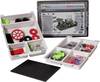
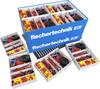
How can electricity be produced in an environmentally friendly way? How does a fuel cell work and how can it produce hydrogen? Renewable energies are important energy carrier of our future. The extraction, storage and use of electricity from the natural energy sources water, wind and sun is explained clearly by nine models and 28 experiments. The powerful solar modules with many mounting options open up the flexible use in the models. The included Gold Cap serves as energy storage and can release the fed energy again. With the help of the fuel cell, it is clearly illustrated how water is split into the two components hydrogen and oxygen. In this way, the principle of future forms of energy is learned and important competences are trained. The STEM Renewable Energies can be optimally used in the classroom with the extensive lesson plans.
Main areas of instruction:
- the extraction, storage and use of electricity
- Learn and understand different renewable energy sources: Water, wind, sun and hydrogen
Accompanying teaching material
fischertechnik education products contain extensive, freely accessible teaching materials. These were developed together with educational institutions, teachers and didactics and are ideal for the needs of the teaching. The products can be discussed in advance. They are freely accessible on the fischertechnik homepage. In addition to the introduction of topics, lesson plans with task sheets and training plan reference are available.
- The introduction of the topic provides content that can be optimally used for preparing the course and integrated into the course. Definition, history, basic knowledge and much more are conveyed.
- The teaching material contains an overview of the learning objectives, the time required for the tasks and the respective curriculum references of the individual federal states in Germany.
- various tasks are included to suit the topics relevant to the curriculum, within which different experiments are dealt with.
- the tasks are divided into a design task, thematic task and experimental task. This increases the level of knowledge gained from building, learning technical content and applying the knowledge gained.
This text is machine translated.