
DIY – The Basics: How Does a Speaker Actually Work?
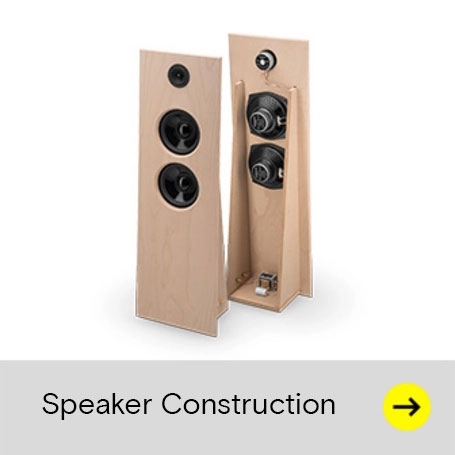
A speaker is, in principle, a surprisingly simple device. Its main components are:
- Drivers (also called chassis): These components are the transducers that convert the electrical audio signal into physical sound waves, thereby setting the air in motion.
- Crossovers: These electrical filters split the signal and route the respective frequency ranges to the drivers best suited for reproducing those frequencies.
- Enclosures
- Cables
In addition to a power source, you'll need a few tools to build this yourself:
- Soldering iron
- Solder
- All-purpose spray adhesive
That's all it takes to get started. Still, it requires a certain amount of know-how—and often a few tries—to get a full, pleasant sound out of your homemade speaker. But it's an extremely satisfying and rewarding hobby—especially when your own creation comes to life in your home theater or music room.

Our selection of products for DIY speaker projects



Get Started Easily: Use Kits to Build a Successful Speaker Project
For beginners who want to try something new with their first project, we recommend a ready-made kit like the KATANA-M1. Without a kit like this, designing your own crossovers and calculating the speaker dimensions requires a great deal of technical knowledge and effort. With a kit, it’s much easier—and more fun—to tackle your first speaker project with the support of experienced audio engineers.
Start your speaker-building project now with the MONACOR product line.