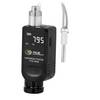
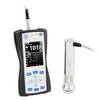
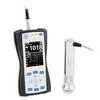
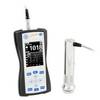
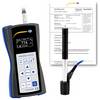
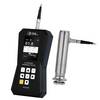
A hardness tester is used to reliably determine the hardness of materials, for example in quality control or in laboratory material tests. The hardness tester is compact and is suitable for small and medium-sized metal parts. The hardness tester can include materials such as aluminum, aluminum-copper alloys, brass, bronze, copper, low-alloy copper, forged copper alloys, stainless steel, steel, forged steel, Check cast iron, cast steel, cast iron, cast iron, and alloy tool steel.
The measurement is carried out with a type D impact device that touches the surface. The hardness values are recorded and evaluated via the software on the connected computer. Common hardness scales such as HRC, HRB, HRA, HB, HV, are supported. HS, HL and MPa. The repeatability is ±2 HL and ±0.3 %. Furthermore, the device has an automatic switch-off after 220 seconds.
The hardness tester is mainly used by test laboratories, production facilities and workshops to check smaller metal parts and to document the measurement results via software.
This text is machine translated.