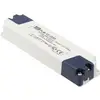
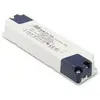
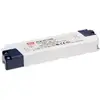
Highlights & Details
LED switching power supply
- Constant current
- 14 - 24 V DC
- 1.05 A
Technical specifications
- Product type
LED driver
- Type
Constant current
- Dim
(L x W x H) 150 x 45 x 25 mm
- Output voltage (max.)
24 V DC
- Output voltage (min.)
14 V DC
- Max. output current
1.05 A
- Output current (max.) - rounded
1.05 A
- Operating voltage
230 V AC
- Protection class
II
- LED driver features
not dimmable
Approved for use on furniture
Surge protection
IP30
- Connection
Screw terminal
- Max. power
25 W
- No. of outputs
1 x
- No. of inputs
1 x
- Input voltage (max.)
295 V AC
- Min. input voltage
180 V AC
- Weight
126 g
- Power range
25 W (max)
- Type
Synchronised
- Width
45 mm
- Height
25 mm
- Length
150 mm
- UKCA
yes
Documents & Downloads
Datasheet
Datasheet 1439413 MEAN WELL PLM-25E-1050 LED driver Constant current 25 W 1.05 A 14 - 24 V DC not dimmable, Approved for use on furniture,
Information
Information 1439413 MEAN WELL PLM-25E-1050 LED driver Constant current 25 W 1.05 A 14 - 24 V DC not dimmable, Approved for use on furniture,
Warranty Terms
Warranty Terms 1439413 MEAN WELL PLM-25E-1050 LED driver Constant current 25 W 1.05 A 14 - 24 V DC not dimmable, Approved for use on furniture,
Description
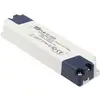
The LED switching power supply in IP30 plastic housing meet the standards EN61000-3-2, Class C, EN55015, EN61347-1, EN61347-2-13 and can therefore be used for LED and lighting applications. This version has a built- in active PFC function.
Features
- PLM-12, PLM-25, PLM-40: 110...295V AC
- PLM-12E, PLM-25E, PLM-40E: 180...295V AC
- plastic enclosure IP30
- overload protection, current limiting, auto recovery
- protections: short circuit/over load
- built-in active PFC function
- low no load power consumption
- suitable for LED lighting and moving sign applications
- Constant current
- EN61000-3-2, class C, EN55015, EN61347-1, EN61347-2-13
Hints
Caution!
Make sure you pick an LED driver/transformer that comes with the appropriate power rating.
Choose a driver/transformer that supplies approx. 30 pecent more watttage, as the current consumption (i.e. amperage) of the LEDs is key, and not the power rating of the LED provided by the LED manufacturer.
Keep in mind that the switch-on surge tend to be much higher.